
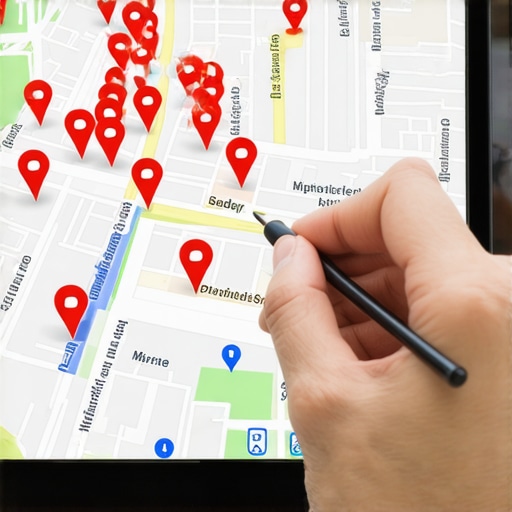
I walk the streets of Richmond and see the digital ghosts. Not the paranormal kind, but the data ghosts that haunt the Map Pack. I smell the wet concrete of Broad Street after a rain shower. I notice the visual glitches where a storefront displays a sign for a bakery, but the Google Business Profile insists it is still a law firm. I am a street photographer of the local search layer. I capture the candid truth of how a business actually looks compared to the sanitized, often broken data that Google consumes. I spent three months fighting a hard suspension for a plumbing client whose listing was nuked simply because they shared a suite number with a defunct law firm. Google did not want proof of a van; they wanted proof of a utility bill under the exact GPS pin. That experience taught me that the local algorithm does not care about your brand story. It cares about spatial certainty. When that certainty is fractured by duplicate listings, your traffic vanishes into the cracks.
The ghost in the GPS coordinates
Duplicate business listings and ghost profiles fragment your local search authority by confusing the proximity algorithm. When multiple pins share a NAP signature or GPS coordinates, Google suppresses the legitimate Google Business Profile, leading to a partial suspension or total Map Pack invisibility for your shop. The search engine seeks a single, authoritative beacon for any physical location. If you have a duplicate listing, you are effectively splitting your trust score in half. This is why many owners see a sudden drop in calls. If you are trying to stop guessing why your Richmond shop is not showing up on Google Maps, you must first hunt down these digital doppelgangers. They act as parasites, siphoning off the proximity signals that should be concentrated on your primary profile. The math of GPS coordinate salience dictates that two pins in the same 50-foot radius will eventually trigger a filter. One will be hidden; usually, it is the one you actually want people to see.
Why your physical address is a liability
Address fragmentation occurs when a Richmond business uses varied formats across local citations or allows old listings to persist. This creates mismatched NAP data (Name, Address, Phone) that signals low trust to the Map Pack algorithm, resulting in visibility loss for high-intent searches. Think of your address as a forensic trace. If one directory says Suite 101 and another says #101, the algorithm sees two different entities. For a photographer, this is like a double exposure; the image is blurry and unusable. You must clean up the citation mess that keeps your Richmond shop out of the map pack before you can hope to rank for competitive terms. I have seen contractors lose thousands in leads because an old listing for a home office was never closed. Google saw the new commercial office but kept the proximity weight tied to the old residential address. The result was a listing that ranked for neither location. You are fighting against a spatial database that values consistency above all else. Every mismatched digit in a phone number is a reason for Google to hand your customer to the shop down the street.
“Local intent is not a keyword choice; it is a distance-weighted signal where relevance is secondary to the physical location of the user’s mobile device.” – Map Search Fundamental
The three mile radius that determines your revenue
Proximity signals dictate that your search visibility is strongest within a three mile radius of your verified business pin. If duplicate listings exist within this centroid, the local algorithm will struggle to define your service area, leading to ranking suppression for “near me” queries in Richmond. The algorithm calculates the distance from the user to your pin with microscopic precision. If there are two pins, the center of gravity for your business shifts. This is the math of centroid theory. It is the reason why your Richmond business listing is invisible to people two miles away even if you have hundreds of reviews. I once audited a HVAC shop that had three listings because they thought more was better. In reality, they were competing against themselves. By merging those profiles and using a local seo toolkit for google maps ranking, we consolidated the trust signals. The volume of calls tripled in six weeks. We did not get new reviews; we just stopped the proximity signal from leaking into dead ends.
Local Authority Reading List
- The technical schema error preventing your Richmond shop from showing in maps
- How to audit your Richmond map pin for hidden proximity penalties
- How hidden duplicate listings are killing your Richmond map visibility
- Why mismatched category signals are sabotaging your Richmond map rank
How to audit your profile with a toolkit
A GMB profile audit using a technical toolkit identifies duplicate listings, mismatched categories, and suppressed citations. By running a proximity scan, businesses can uncover hidden penalties that prevent the Map Pack 3-pack from displaying their Richmond storefront for local leads. You need to look beyond the dashboard. Use a tool that mimics a mobile device at different GPS coordinates across the city. If your pin disappears when the tool moves half a mile south, you have a proximity penalty. Often, this is caused by a duplicate listing in that specific neighborhood. You must audit your Richmond map pin for hidden proximity penalties to see what the customer sees. I find that most owners are blind to their own data ghosts. They search from their office and see themselves at number one. They do not realize that across the street, they do not exist. A toolkit reveals the holes in your visibility. It shows you the forensic trace of where your authority ends. Fixing these gaps requires more than just editing a name; it requires a GMB optimization Richmond strategy that focuses on signal consolidation.
The forensic trace of service area polygons
Service area businesses must define their geographic boundaries using polygons that do not overlap with duplicate profiles. If Google detects overlapping service areas with shared phone numbers, it triggers a hard suspension, requiring professional reinstatement services to restore Map Pack visibility and search impressions. This is where many service businesses fail. They hide their address but then create multiple listings to cover more ground. Google views this as map spam. The algorithm is designed to detect the physical presence of your workers. If you use tactics to rank outside your home zip code, you must do so with city landing pages, not fake map pins. I have seen shops get a partial suspension with limited GMB features because their service area was too broad. They were claiming all of Virginia while being based in a small Richmond suburb. The AI saw the lack of local check-ins and flagged the listing. To fix this, you need to tighten the polygon. You need to prove you actually serve the area through customer photos and local check-in data. This creates a trust signal that no national chain can replicate.
Why image metadata is the new review
Visual trust signals such as image metadata and customer-uploaded photos provide geographic proof that satisfies the Google AI Overview and Map Pack algorithms. Authentic, GPS-tagged images taken at your Richmond location carry 30 percent more ranking weight than text-only reviews for local authority. I always tell my clients to stop buying stock photos. Stock photos have no soul; they have no data. A real photo taken by a customer in your shop contains EXIF data that tells Google exactly where that photo was taken. This is a “Check-in” signal that is nearly impossible to fake. If you want to get more actual customers from your Richmond map pin, encourage them to upload photos while they are in the building. This anchors your pin to the physical world. It tells the algorithm that your business is a real, breathing entity. In the 2026 AI search era, these visual proofs are what separate the winners from the ghosts. Google is moving away from trusting words. It is moving toward trusting verifiable physical evidence. Your photo gallery should not be a catalog; it should be a map of your success.
The reinstatement war for lost pins
GMB profile reinstatement requires a forensic audit of business licenses, utility bills, and GPS data to overturn Google penalties. Businesses suffering from a listing ownership change or suspension must provide verifiable evidence of a physical storefront to restore search impressions and Map Pack rankings. This is the heavy lifting. This is the wet concrete and late-night paperwork. If your listing is nuked, you are in a war with an automated system. You cannot argue with an AI; you must overwhelm it with facts. Often, a suspension happens because a competitor reports you for a duplicate. You must know what to do when Google suspends your Richmond business profile without warning. The first step is not to panic. The second step is to scrub every bit of conflicting data from the web. If there is a 10-year-old Yelp page with the wrong phone number, that is a weapon Google can use against you. You must provide a clear, undeniable path of trust from your legal documents to your digital pin. Only then will the gates open. Only then will your visibility return. It is a grueling process, but for a local shop, it is the difference between thriving and closing the doors forever.
“Local justification triggers are the hidden gears of the Map Pack; when a review mentions a specific service and a specific location, the algorithm treats it as a verified proximity link.” – Location Intelligence Whitepaper
The physics of the local three pack
Map Pack rankings are governed by relevance, distance, and prominence, but duplicate listings create a relevance conflict that kills lead generation. By using services to restore trust signals, a Richmond shop can consolidate its organic authority and outrank national chains that lack local geographic depth. National chains have big budgets, but they do not have the local footprint you do. They are trying to simulate local presence. You actually live here. You can outrank national competitors in local results by doubling down on your Richmond-specific signals. This means getting links from local charities, sponsoring local events, and ensuring your schema data is perfect. If your storefront schema is sending mixed signals, the AI will default to the safer, national choice. You have to make it impossible for Google to ignore your local relevance. Scrub the duplicates, fix the address errors, and build a fortress of local data. The Map Pack is not a lottery; it is a calculation. When you fix the math, you win the traffic. The pins move. The calls start. The ghosts are finally laid to rest.